Netflix’s animated musical fantasy Steps arrives with an enviable roster of voice talent and a premise that promises to upend the familiar Cinderella story. Yet this Steps Netflix review finds a film that buckles under the weight of its own ambitions, delivering a busy, candy-colored spectacle that rarely musters genuine charm. Directed by Alyce Tzue and John Ripa and produced by Amy Poehler, the movie reimagines Cinderella’s stepsisters as misunderstood heroines, but the execution leaves the starry cast stranded in a convoluted narrative.
A Revisionist Fairy Tale With Too Many Cooks

The central idea is that the stepsisters have been unfairly maligned by history. Lilith (Ali Wong), a punky teenager, sets out to correct what she calls the “character assassination” of the classic tale, while her younger sister Margot (Stephanie Hsu) is a sweet-natured soul who loves everyone, especially frogs. When their dressmaker mother Li Mei (Gwendoline Yeo) remarries and moves them to the kingdom of Alouette, the sisters hope for a fresh start. Their new stepfather Edmund (Matt Lowe) is kind, and his daughter Cinderella (Amanda Seyfried) quickly befriends them. But their cheongsams and black hair mark them as outsiders in a pastel, rococo-inspired world, and the film’s attempts to explore cross-cultural differences remain tentative and underdeveloped.
The screenplay is credited to five writers, with a story by six, including Riki Lindhome and Kate Micucci of Garfunkel and Oates. That crowded authorship shows: the plot lurches from one set piece to another, blending modern humor with fairy-tale tropes in a way that feels patched together rather than organic. The result is a movie that is simultaneously overstuffed and sluggish, and the dialogue rarely rises above lame quips.
Stellar Voices, Underwritten Characters

Seyfried’s crystalline vocals are a pleasure on Justin Trantor’s original songs, and Bette Midler, as the Fairy Godmother, brings her usual sharp wit to the role. Daniel Radcliffe voices the handsome Prince, while Peter Dinklage plays the sinister butler Roderick and Nikki Glaser is the vain mean girl Priscilla. Yet most of these performers are given little to make their characters endearing. The film’s humor falls flat, and the emotional beats—particularly the bond between Cinderella and her stepsisters—never land with the intended warmth.
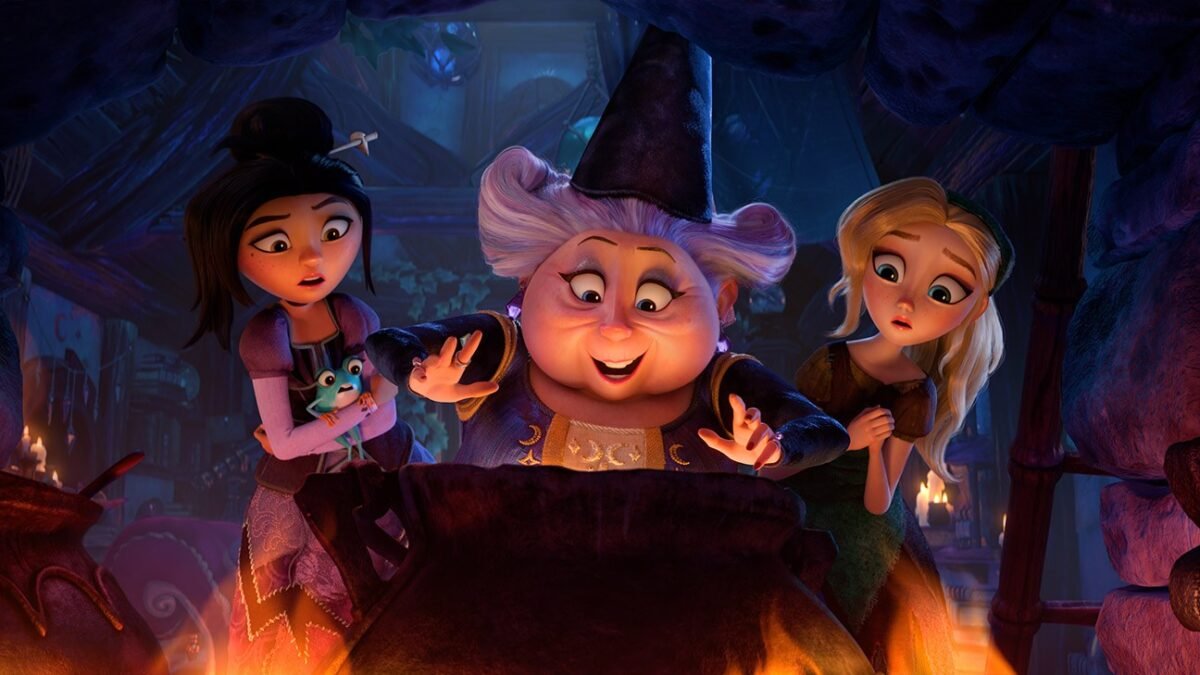
The animation style mixes K-animation and Disney influences, with round faces and saucer eyes that suggest an attempt to capture the energy of recent hits. A poppy end-credits song by Blackpink’s Jennie further signals the film’s modern aspirations, but these elements feel cosmetic rather than integral. The cultural fusion is too timid to gain traction, leaving the impression of a project that is more ersatz than original.
A Plot That Trips Over Itself
The story kicks into gear when Lilith and Margot are tricked by Priscilla into entering a gated storm drain, where she locks them in. Cinderella witnesses the cruelty but succumbs to peer pressure, planting the seed of betrayal. Later, when the stepsisters are excluded from a Royal Ball, Lilith snatches the Fairy Godmother’s wand and creates her own goth-glamour fantasy, crashing the party in a skull-shaped carriage. Disaster strikes when Priscilla gets hold of the wand and convinces the Prince that she is his true love, breaking the fairy tale. The ensuing chase sends Cinderella, Lilith, and Margot—who is turned into a talking frog—into the woods, where they encounter a hunky troll named Gef (Young Mazino).
These developments should be lively, but the forest odyssey drags, and the movie grows more stubbornly unmagical by the minute. The answers to the film’s central questions are plain to see, yet the directors take an inordinate amount of time to get there. The busy plot and sluggish pacing make Steps a chore to follow, even for adults who might otherwise appreciate the revisionist angle.
Strictly for the Youngest Viewers
For children—especially young girls—the film’s bright colors and familiar tropes may be enough. But adults forced to keep them company will find little to enjoy beyond the occasional vocal flourish. Steps squanders its talented cast on a cluttered, charm-deficient fairy tale that is neither enchanting nor particularly funny. It is a revisionist Cinderella that forgets to bring the magic.