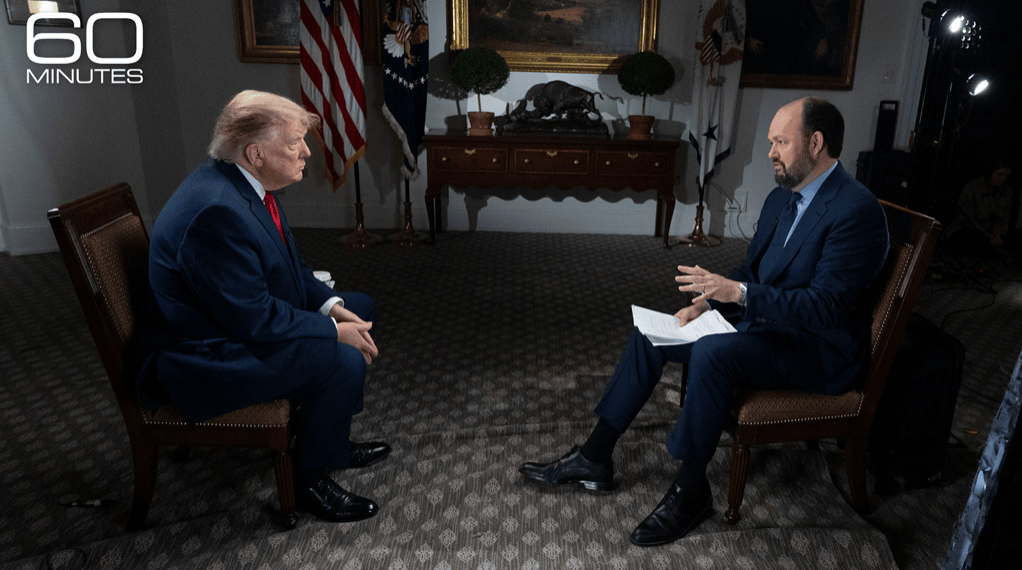
President Donald Trump offered his first extended post-election assessment of the Republicans’ midterm defeats, telling CBS’s 60 Minutes that his own absence from the ballot was the leading factor and that he broadly accepts Vice President J.D. Vance’s competing explanation. The interview with correspondent Ross Douthat aired Sunday on CBS and Paramount+.
Asked directly about Trump on midterm losses, the president began with a simple premise: he was not a candidate. He said he had campaigned energetically for others and argued that his own popularity would have produced a different outcome, but he acknowledged that voters had to be moved from him to candidates they did not necessarily favor.
Beyond the mechanics of the races, Trump pointed to three issues he said drove voters away: the war, rising gasoline prices, and what he described as an intense dislike of Israel. Those remarks came as he weighed in on a lengthy post-election analysis published days earlier by Vance, who listed four priorities for disaffected Republicans that he said helped Democrats reclaim Congress: ending the war, addressing the cost of living and inflation, putting America first, and changing the relationship with Israel.
Douthat asked whether Trump agreed with that diagnosis. The president said he did not disagree, and he described telling Vance to write whatever he thought. But Trump added one element he wished the vice president had included—a reference to the decision-making process behind the Iran policy, framed as a question of whether the administration would make the same choice again.
Trump answered that question himself, saying his response would be an emphatic yes because Iran cannot be allowed to obtain a nuclear weapon. He argued that history would judge the decision favorably even if it is not popular in the short term, and he said he acted on what he believed was right for the country. He also contended that allowing Iran to go nuclear during his tenure would have drawn far harsher criticism.
Economic message and the press

When Douthat noted that polling shows Americans are unhappy with the economy—citing cost of living and inflation—Trump rejected the premise that the Iran war was the cause. He said the economic numbers are strong and blamed bad messaging, including potentially his own, for failing to convey that record. He argued that the press does not cover positive news for Republicans or for him, so he must communicate it himself, pointing to what he called historically good figures and the highest stock market in history.
Pressed on what the flawed message was, Trump said simply that the administration could not get the word across.
A successor and a third impeachment

The conversation also turned to the next presidential cycle. Asked whether he will endorse a Republican nominee in two years, Trump said probably but not necessarily. He described a deep bench and said he has strong relationships with many potential candidates, naming Vance and Secretary of State Marco Rubio as strong options while saying there are others, including some senators he declined to identify. He said he may or may not get involved and suggested he might be better off staying out.
On the possibility of a third impeachment effort by Democrats, Trump dismissed the idea with a question of his own about what he had done wrong, then asserted that his first two years have been the best in the history of the presidency.