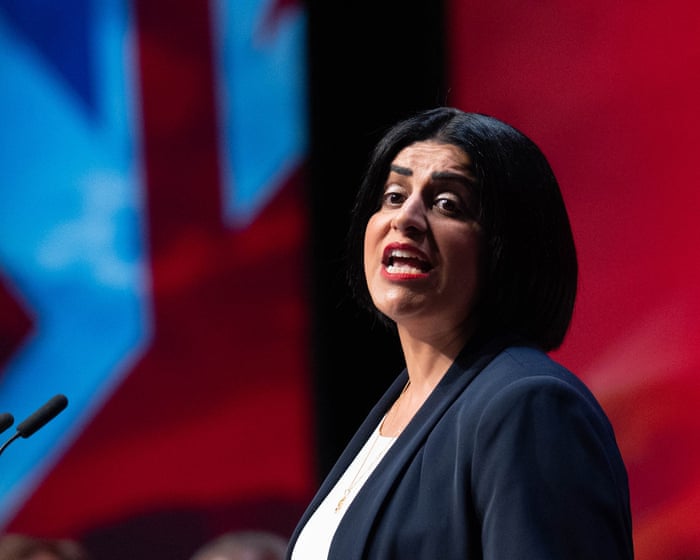
The sharp increase in Turkish nationals facing removal from the UK has prompted allegations that the Home Office has ignored the central lessons of the Windrush scandal. Concerns centre on a steep rise in refused applications for indefinite leave to remain from people on European Community Association Agreement (ECAA) visas, a route long used by Turkish citizens seeking to establish businesses in Britain.
The pattern of refusals appears to affect applications submitted from September 2025 onward, shortly before Home Secretary Shabana Mahmood set out proposals at the Labour conference for stricter conditions on those seeking leave to remain. Mahmood said at the time that solving the crisis might require questioning assumptions and legal constraints that had endured for generations, and warned that not everyone would welcome her actions.
Refusal letters contain basic errors and invented requirements
Although the Home Office insists the rules have not changed, doubts have been raised, including by former foreign secretary David Lammy. He said there appeared to be an abrupt policy shift that had devastated affected people’s lives and brought back memories of Windrush.
Hundreds of ECAA holders have been refused permanent residency since January, a significant increase on previous years. Successful applications have fallen from the customary several thousand to only a few hundred over the same period.
Refusal letters have been marked by elementary mistakes, requirements that do not exist and a failure to show discretion in cases involving serious personal hardship. Many of those turned down arrived in the UK within the past seven years and have built successful businesses.
One woman began cancer treatment in Turkey after being diagnosed during a trip in the Covid-19 pandemic, when the NHS restricted such care. Her application was rejected on the basis that she had chosen to start treatment in Turkey, despite her medical team warning that transferring her clinical care carried significant clinical risk. After a review, the Home Office maintained its position and told her in October that she and her three young children should leave the UK.
Another applicant was told his window-cleaning business was not legitimate because he lacked a social media presence, a requirement that does not exist. A woman whose father in Turkey has terminal Alzheimer’s was refused indefinite leave to remain because the department said his condition had been known for several years, meaning her absences from the UK did not arise from an urgent unforeseen situation.
Lammy calls for Windrush lessons to be revisited

Lammy, MP for Tottenham, a constituency with a large Turkish-speaking population, said constituents had contacted him after their lives were devastated by what seemed to be a sudden change in Home Office policy. He described them as people who had built their lives and families in Britain and played by the rules.
He said the stories reminded him of the Windrush scandal and urged the department to revisit and consider the Lessons Learned review. He called the situation entirely unacceptable and said he wanted justice for Britain’s Turkish-origin community.
Requests for administrative review, through which the Home Office re-examines a refusal, have risen sharply. According to a freedom of information request, such cases jumped from 145 in 2025 to 395 between January and mid-August 2026. Lawyers handling ECAA cases have reported long delays for applications lodged from September 2025, beyond the usual six-month wait.
Departmental data shows a stark decline in grants of indefinite leave to remain through this route. Between January and June 2025, there were 3,378 settlement grants for ECAA applicants. Over the same period in 2026, the figure fell to 745, a drop of 78%.
Lawyers said such cases were previously approved as a matter of routine because of guidance on compassionate circumstances, but that a harsher approach took hold for applications lodged from last September.
Caseworkers also appear to be making significant errors or imposing non-existent requirements. In one refusal later overturned, the department said it could not locate a website for the applicant’s business or evidence of any online presence, including social media, and falsely claimed the applicant had not supplied a complete set of bank statements. In another, the Home Office miscalculated the number of days the applicant had spent outside the country, wrongly asserting they had been abroad for more than 180 days in a 12-month period.
Approach conflicts with Windrush review recommendations
The treatment of ECAA holders appears to conflict with several recommendations from the independent review into the Windrush scandal, which then home secretary Priti Patel accepted and promised to implement. These included clearer guidance on the burden and standard of proof, more direct contact with applicants, and revised criteria and processes for assessing vulnerable people.
A Home Office spokesperson said there had been no change to how ECAA settlement applications are considered and that every application continues to be assessed on its individual circumstances in line with published rules and guidance.