
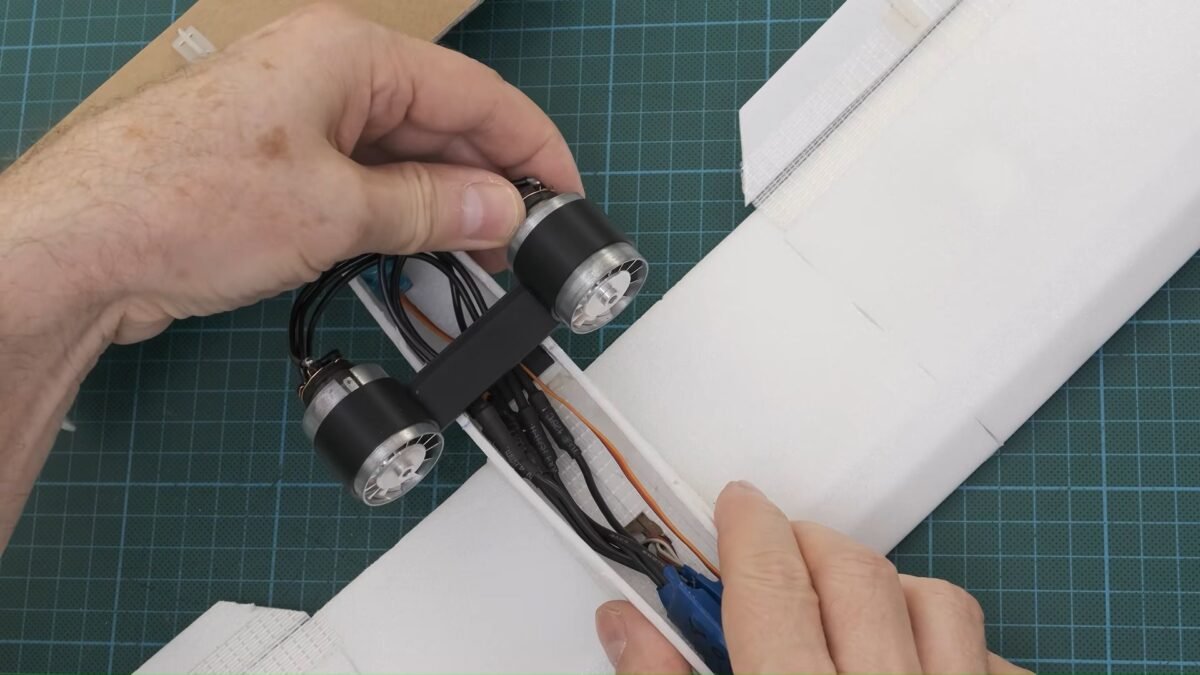
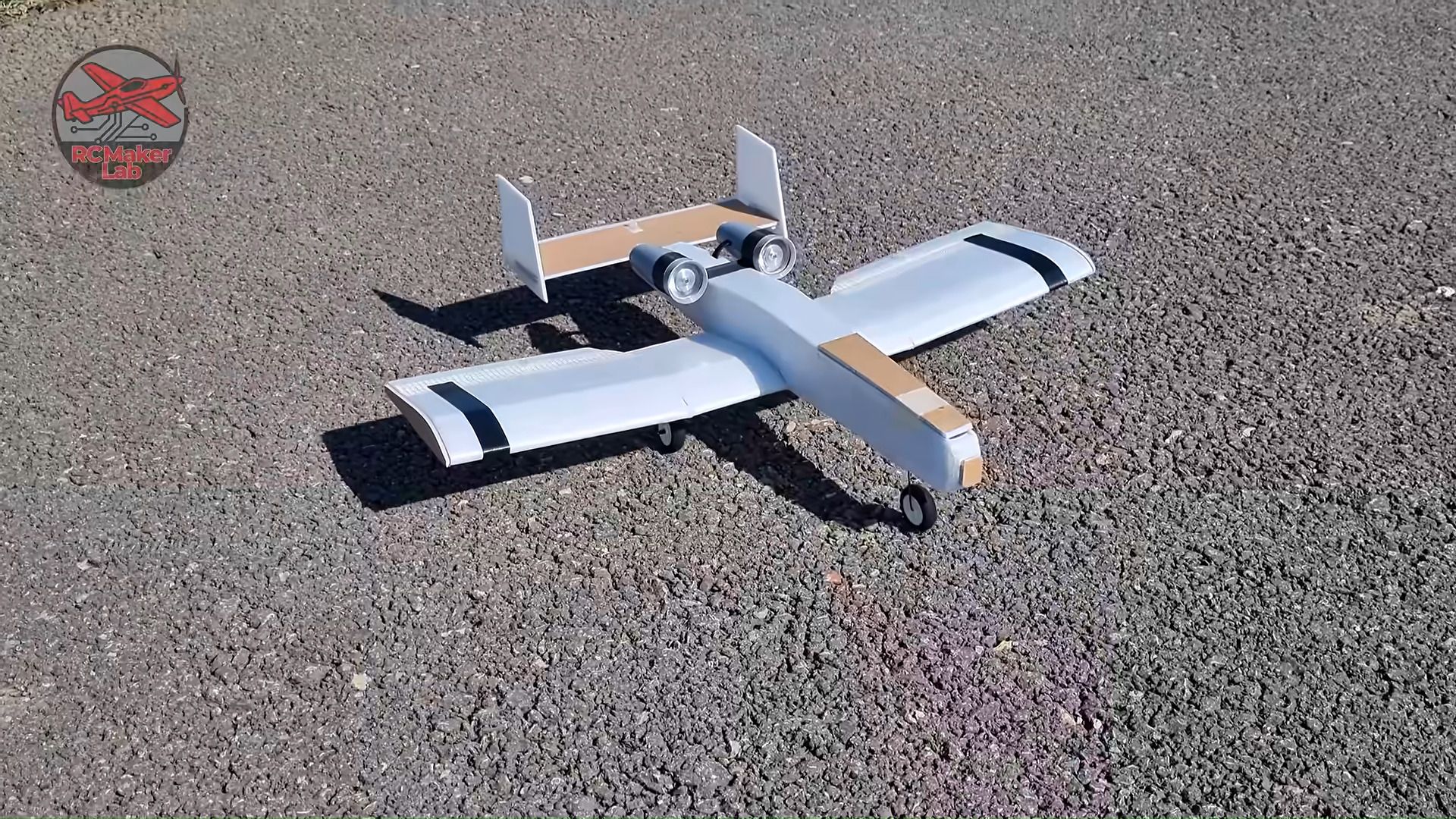
A hobbyist known as RCMakerLab has demonstrated that a DIY RC plane can achieve surprising speed using an unconventional power source: two motors salvaged from PC air dusters. The finished model, which resembles an A10 Warthog and has a 21-inch wingspan, flew considerably faster than its builder had expected, according to the maker’s own commentary. The project was documented in a video that devotes most of its runtime to construction before culminating in a rapid takeoff.
From PC Cleaning Tool to Model Aircraft Powerplant
The inspiration for the build came from earlier experiments in which RCMakerLab disassembled and tested air duster engines to gauge their potential thrust. After sharing those initial findings, viewers encouraged the maker to move beyond speculation and install the tiny motors in an actual remote-controlled aircraft. The result is a twin-engine plane that weighs just 368 grams (about 0.8 pounds) and measures 42.5 centimeters (roughly 17 inches) in length.
The air duster motors used in the build are no-brand units sourced from AliExpress, each rated at 130,000 RPM and priced at $23. For comparison, a similar-performing brushless air duster—the Wolfbox MF60, which spins at 110,000 RPM—is currently available on Amazon for $31.99 after a 36% discount. These rechargeable handheld devices occupy a middle ground between disposable canned air and larger workshop compressors, making them an attractive option for PC DIY enthusiasts. Their high rotational speed and compact size make them equally appealing to hobbyists looking for lightweight propulsion.
Building the Airframe and Control System
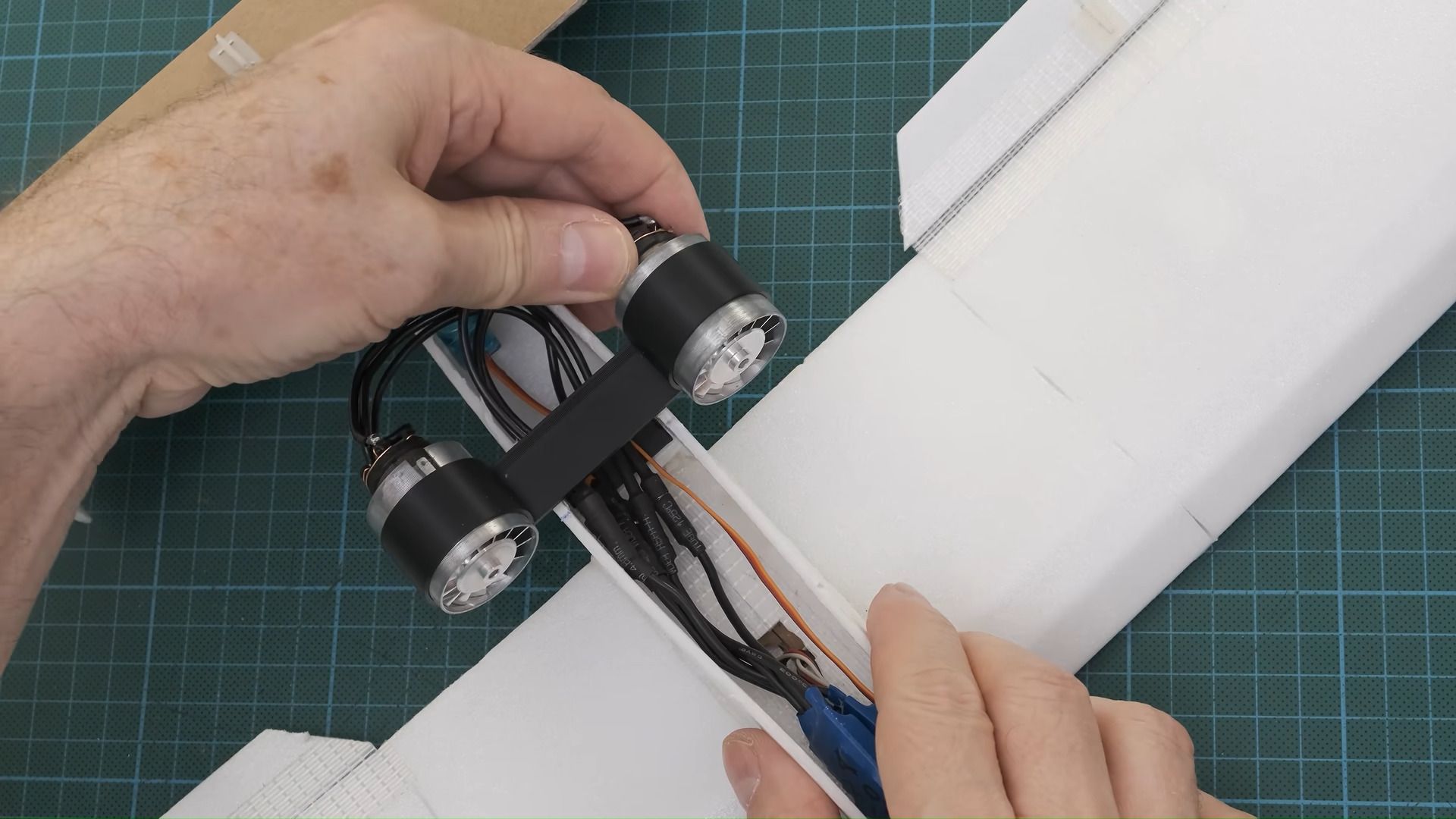
The construction portion of the video runs for approximately eight minutes of the ten-minute total. The wings are formed from a folded-over sheet of Styrofoam, joined with hot glue—a simple, low-cost technique that keeps the airframe light. The maker also devised a motorized wing flap control that stands out as particularly clever. For viewers eager to see the propulsion setup, the two air blower motors are installed around the eight-minute mark, and the plane’s rapid takeoff occurs at 9 minutes and 20 seconds.
Beyond the air duster motors, the aircraft relies on a set of accessible electronics. Two 20A brushless ESCs handle power delivery, while 5-gram micro servos manage the control surfaces. A Flysky iA6 radio control system and an FS2A micro receiver keep the pilot connected to the model. A 1,300mAh battery provides energy, yielding an estimated flight time of three to four minutes—a short window that is understandable given the power demands of the twin high-RPM blowers.
Flight Performance and What Comes Next
When the plane finally took off, the result was a machine that looked very fast and extremely agile in the air. The sound of the twin air duster motors also drew praise. For a build assembled from inexpensive components and foam, the performance appears to have exceeded expectations—a point the maker made clear when describing the flight as much quicker than anticipated.
The video concludes with a hint at future plans. Encouraged by the success of this air duster-powered experiment, RCMakerLab is considering a much larger high-wing model. The maker invited viewers to weigh in via the comments, asking whether the larger project should go ahead. That tease suggests the air duster motor concept may be scaled up, though no timeline or specifications for the potential build have been shared.
For now, the project stands as a proof of concept: a DIY RC plane that turns cheap, readily available PC cleaning hardware into a compact and spirited flyer. The full build, from foam wing construction to the first fast takeoff, is captured in the video, offering a template for anyone curious about repurposing air duster motors for flight.


