Culture Secretary Lisa Nandy has pushed back against suggestions that she politicised Remembrance Sunday by tying the UK’s planned Erasmus+ rejoin to the annual commemorations of wartime sacrifice.
The dispute erupted after her department issued a statement on Saturday night framing the return to the European Union’s study and work programme as part of the country’s remembrance of those who died in conflict. The announcement said Erasmus+ would allow a new generation to forge links across Europe as the nation marked Remembrance Sunday.
Conservative figures seized on the wording, arguing that veterans’ sacrifices should not be used to promote an EU programme. The party’s chairman, Kevin Hollinrake, called the remarks tone deaf and shameful and urged Nandy to apologise. He said the ties formed by veterans went far beyond anything a student exchange scheme could offer, and that the day was not an occasion for a Labour minister to make a pitch for EU membership.
Reform leader Nigel Farage also criticised the timing, telling the BBC that using Remembrance Sunday to announce the scheme and frame it around peace and war was in very poor taste. Peter Sharples, chief executive of the Veterans Institute, told the Telegraph that the focus on Remembrance Sunday should be simply honouring the fallen rather than discussing party political matters.
Nandy stands by her remarks

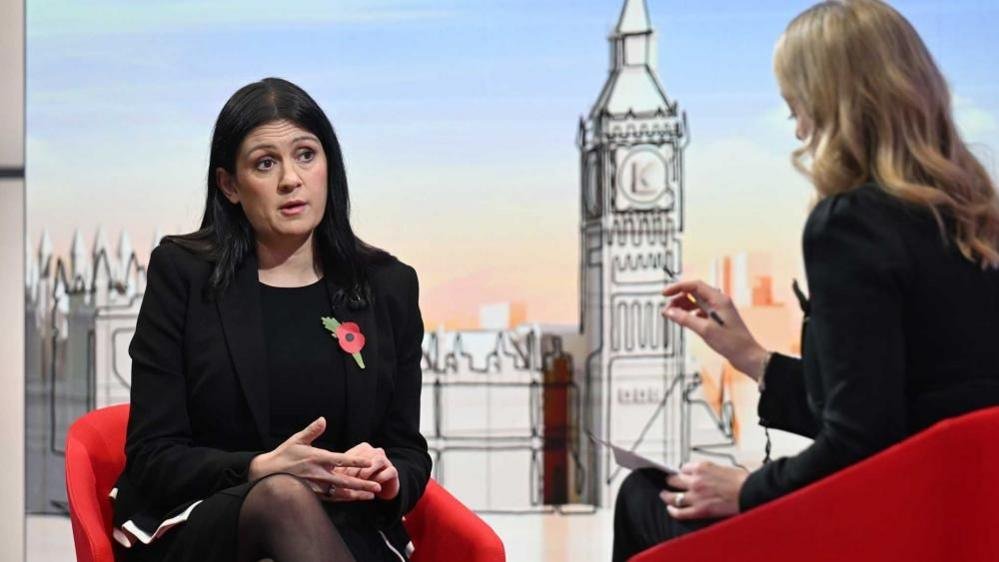
Appearing on the BBC’s Sunday with Laura Kuenssberg programme, Nandy said she was horrified by the Conservative response and declined to withdraw her comments. She invoked Winston Churchill’s post-war call for friendship across Europe, arguing that honouring the legacy of the Second World War generation meant preserving the opportunities that generation had fought for.
She contended that leaving the EU had closed off chances for young Britons to understand not only what that generation did at home but also how they fought for freedom across Europe. When asked whether she had chosen Remembrance Sunday to promote the government’s new deal with the EU, Nandy said she was not using the day, or any other, to promote such a deal. She added that there had been a time when linking the scheme to cultural exchange would not have been seen as political at all, describing it as common sense.
What the scheme involves

The UK is set to rejoin the expanded Erasmus+ programme in January, six years after leaving it under the Brexit settlement. The government has said the cost of entry is £570m, which it describes as a 30% discount. Applications are due to open later this month.
Under the plans, UK university students and their European counterparts will be offered free year-abroad placements. The government also intends to provide free train passes for 18-year-olds to travel to EU countries alone or with up to five friends. Youth groups will be able to take part in short exchanges, with a particular focus on regions that previously had less engagement with Erasmus, including the north of England and the Midlands.
Farage dismissed Erasmus as a terrible and wildly expensive scheme compared with the Turing Scheme, which ministers introduced in 2021 as a post-Brexit alternative. He also criticised continuing negotiations between London and Brussels over a new youth mobility arrangement ahead of a major summit on 20 November.
The row comes amid a wider debate about the UK’s future relationship with the EU. Prime Minister Andy Burnham has said he wants an honest discussion about the prospect of returning to free movement, while the EU’s former Brexit negotiator Michel Barnier has warned that the UK cannot cherry-pick which elements of the single market it subscribes to.
Nandy said on Sunday that most of the benefits promised for Brexit in 2016 had not been realised, and that trade-offs and choices lay ahead for Britain’s relationship with the EU.