
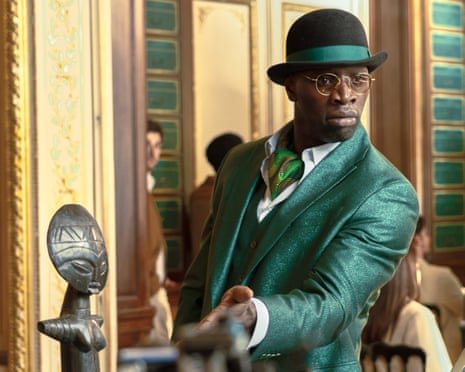

In this Lupin season four review, the French jewel heist thriller returns with Omar Sy once again playing Assane Diop, the master thief who modeled his life on Arsène Lupin. But the Netflix series opens in a very different place. Season three ended with Diop surrendering to police, and season four begins four years later, with its hero in a maximum security prison and only one week away from release. He had planned to join his family in Senegal.
A Prison Built for Watching
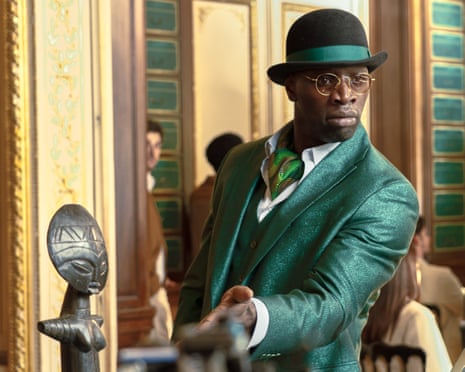
Episode one reaches the prison cell by the twelve-minute mark, and the show does not waste the setup. Diop is held in a panopticon-style glass cell, straitjacketed, while guards and prisoners mock him. The is deliberately extreme, but it works as a visual summary of his new condition: the man who once controlled every room is now on display.
Paris, meanwhile, has been hacked. Heists are announced under the name Lupin. The police treat Diop as the obvious suspect, even though he is locked away. They find it unthinkable that anyone else could be responsible. Diop is moved into the glass cell, and the show turns his imprisonment into a pressure chamber.
Copycats and a Frame

Other thieves are copying Diop, and he is no longer controlling events. That loss of command is the season’s central tension. The reviewer, Micha Frazer-Carroll, notes that Diop is at the mercy of others, and the plot keeps testing how much of his old reputation he can survive.
His history with the law adds another layer. Diop’s father was falsely accused of jewel theft, and Diop became a criminal to avenge him. Now Diop is the one falsely accused. Hubert Pellegrini was previously revealed as a mastermind, but the new season places the suspicion squarely on Diop himself. His son may be affected, and Diop remembers promising the boy that he would stop.
Race, Disguise and Suspicion

The show has always understood that Diop’s race cuts both ways. His Blackness once helped his disguises, allowing him to pass as a janitor or a delivery person, roles that people overlook. In season four, that same racialization becomes his downfall. Blurry footage shows a Black robber, and the police decide it must be Diop. In a France described as supposedly colorblind, the assumption hardens fast.
The real 2025 Louvre heist, in which robbers posed as construction workers by day, drew comparisons to the show. Diop himself once posed as a caretaker at the Louvre. The parallel is not subtle, but the season uses it to ask what happens when an infamous life refuses to end.
Bigger Scale, Familiar Cliches

Season four expands from the earlier five episodes to eight, and Sy has graduated to co-showrunner. The show adds technology and larger set pieces, aiming for a blockbuster feel with Marvel-style elements. Sy has said he wants to emphasize the character’s superhero-like qualities. The result is more cinematic, but not always tighter.
Frazer-Carroll calls Sy’s performance magnetic and the twists relentless. She also notes some over-dramatized moments and a cliche of one last job. The central question is whether a mastermind can also be a victim, and the review leaves some doubt about what to trust.
One piece of advice is unambiguous: watch in French. The reviewer calls the default US English setting sacrilege. The show avoids exposition and offers Houdini-style thrills, and the French audio is essential to that experience. Season four has faced delays, and fans have complained, but the series remains a global hit. Whether it earns its bigger canvas is the question this review leaves hanging.
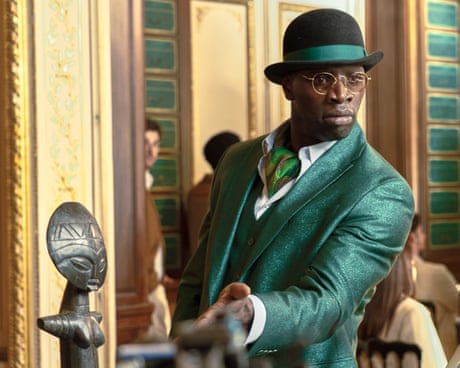
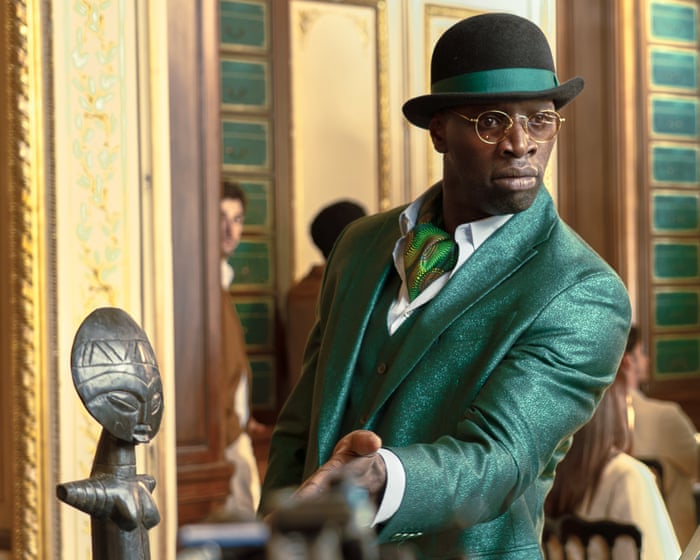



[…] Lupin Season Four Review: Assane Diop Trapped in His Own Legend […]