Elon Musk recently expressed high confidence that SpaceX could construct 10 gigawatts of data center capacity in 2027 alone. That claim, initially met with skepticism, has now received a cautious endorsement from analysts at Semianalysis, who argue in a detailed report that the SpaceX 10 GW data center target is achievable under the right conditions. The analysis suggests that if SpaceX meets this goal, it would build in roughly 1.5 years as much capacity as Google has accumulated over its entire history.
The Colossus Buildouts as Evidence
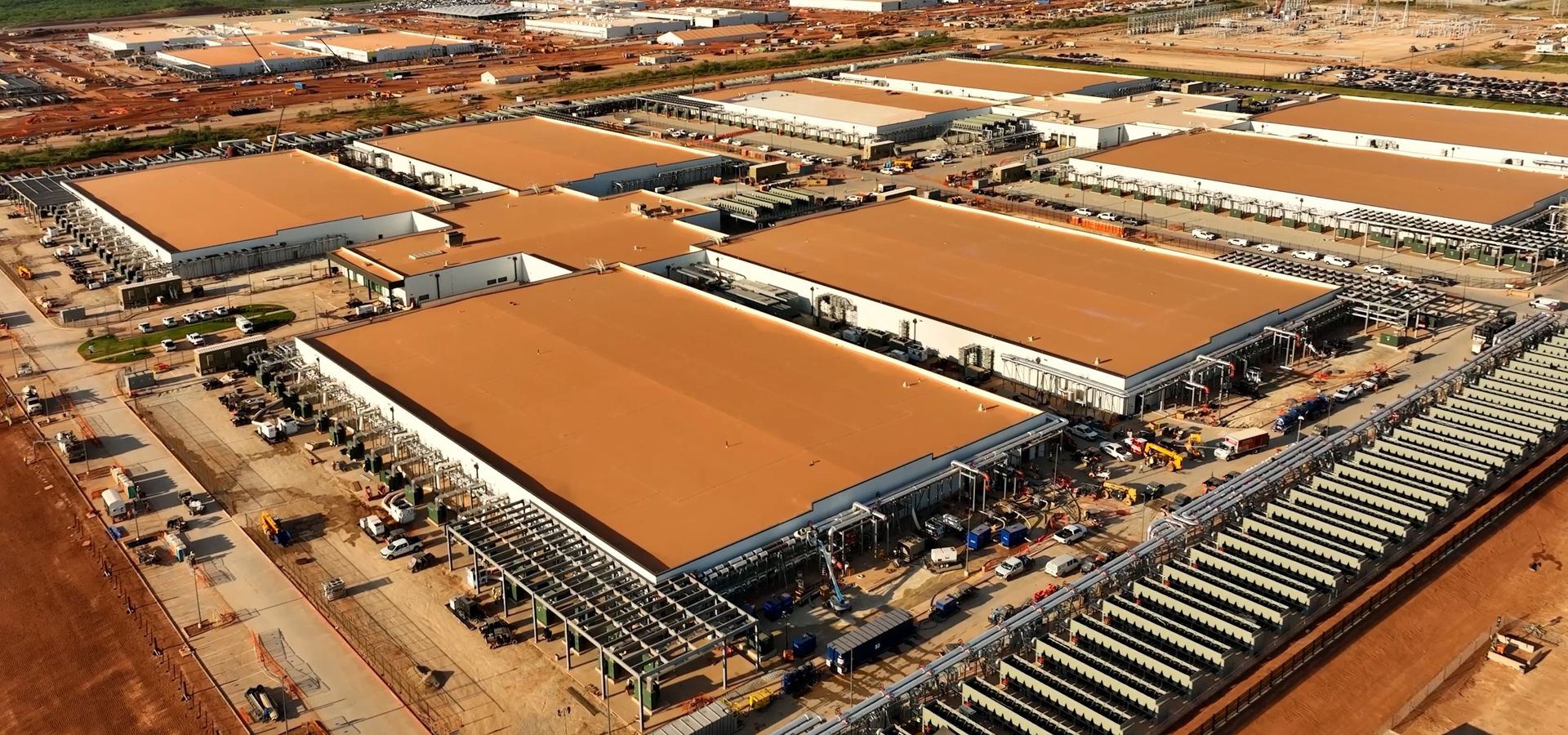
The analysts base their assessment on the rapid pace of SpaceX’s Colossus 1 and Colossus 2 facilities, using aerial imagery and publicly available data to estimate progress. Colossus 2’s power generation capacity reportedly grew from 0.4 GW in January to a projected 2.4 GW by year-end. Across all tracked sites, including Colossus and Starbase, Semianalysis tallies about 9 GW of potential data center capacity.
At one facility, 89 turbines are capable of delivering roughly 2.5 GW, supported by 1,377 Tesla battery Megapacks already on site. Emissions regulations will eventually limit the facility to operating only about 1.24 GW of its own turbines. Even with an additional 1.2 GW from the grid, a 300 MW shortfall remains, which the batteries are expected to cover during compute load fluctuations and possibly through external power. SpaceX has an agreement with Mississippi allowing temporary operation of the extra turbines, with a promised phase-out by July 2027.
As of September 25, Musk said Colossus 2 already had 550,000 GPUs operational, presumably within the existing Macrohard and Macroharder buildings. SpaceX was reportedly pushing to complete its Gun Range and Project SPAM centers quickly. Photos suggest rapid progress, with structures now visible where only loose dirt existed months ago, though there is no confirmation that GPU racks are installed yet.
Speed as a Competitive Advantage
Semianalysis notes that SpaceX’s construction pace is so aggressive that builds often begin before power solutions are finalized, with power supplies arriving later. While GPU and RAM shortages are widely reported, securing sufficient power is itself a major challenge for any data center. If SpaceX can maintain its supply of gas turbines, that alone would be a significant feat. The analysts suspect Tesla may be manufacturing mechanical and electrical equipment in modules, ready for direct installation from factories or trucks. The temporary turbines, mounted on truck flatbeds as mobile power generation, appear designed to navigate regulatory constraints.
In the hyperscaler arena, speed is critical, especially as doubts grow about whether all players will succeed. Compute capacity under construction and eventually coming online is attractive to AI companies, but they are willing to pay steep premiums for anything available immediately, as demand far exceeds supply.
Operational and Regulatory Hurdles
However, built facilities do not guarantee operational functionality at expected rates. Zoning, permits, grid connections, power generation limits, water supply, and public opposition are among the obstacles that have slowed builds elsewhere, none of which relate to the presence of computing hardware. Microsoft’s Satya Nadella has noted that a significant number of chips may sit in inventory unable to be plugged in, a problem he described as current. Reports also indicate that a notable percentage of AI accelerators remain in warehouses awaiting deployment.
Because data center construction involves many interdependent factors, even if Colossus 2 finishes as quickly as it appears, that does not ensure SpaceX can replicate the success at other sites. Engineering involves no luck, but variables such as hardware and material availability, shifting legal conditions, and public opposition are hard to predict, even for someone with resources as extensive as Musk’s.
Still, Semianalysis observes that two data centers at Starbase are undergoing rapid construction, suggesting SpaceX can indeed replicate Colossus’ pace. The analysts attribute this speed to SpaceX having most infrastructure and power generation hardware effectively in-house through Tesla’s manufacturing capabilities. If that assessment holds, the company could bypass supplier lead times that other hyperscalers face.
Even if SpaceX falls short of its 10 GW in a year target, the Colossus buildouts indicate the company may be moving faster than anyone else in the space. In the AI gold rush, coming first may be all that is needed to win.