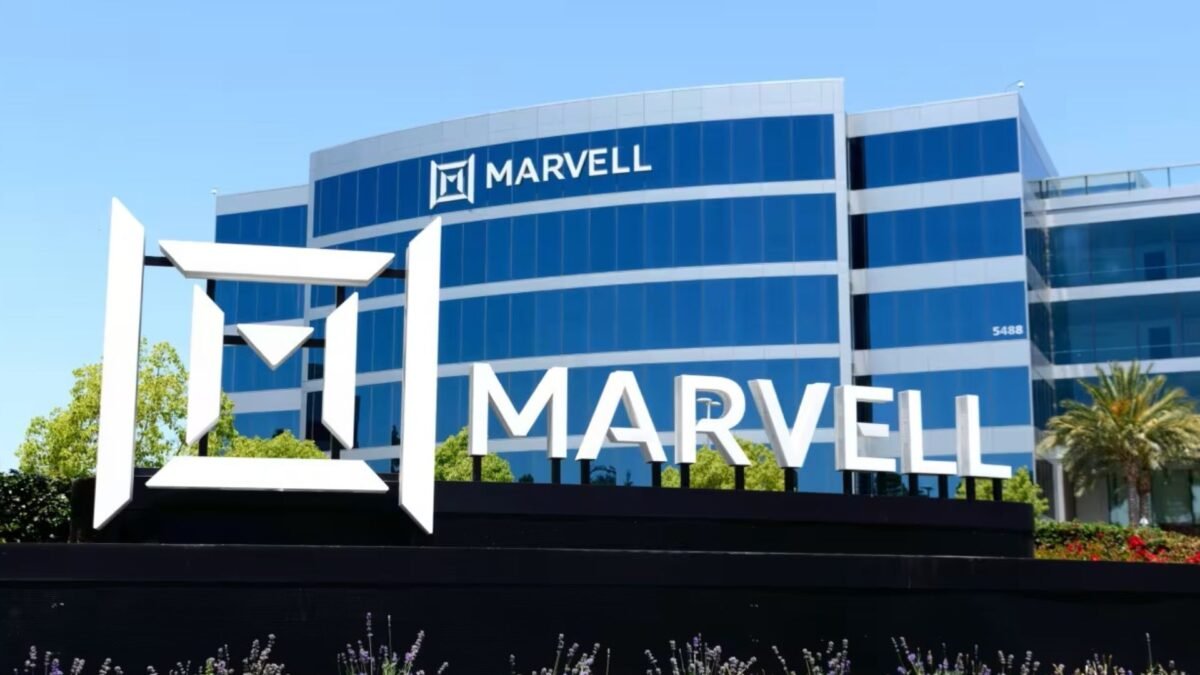
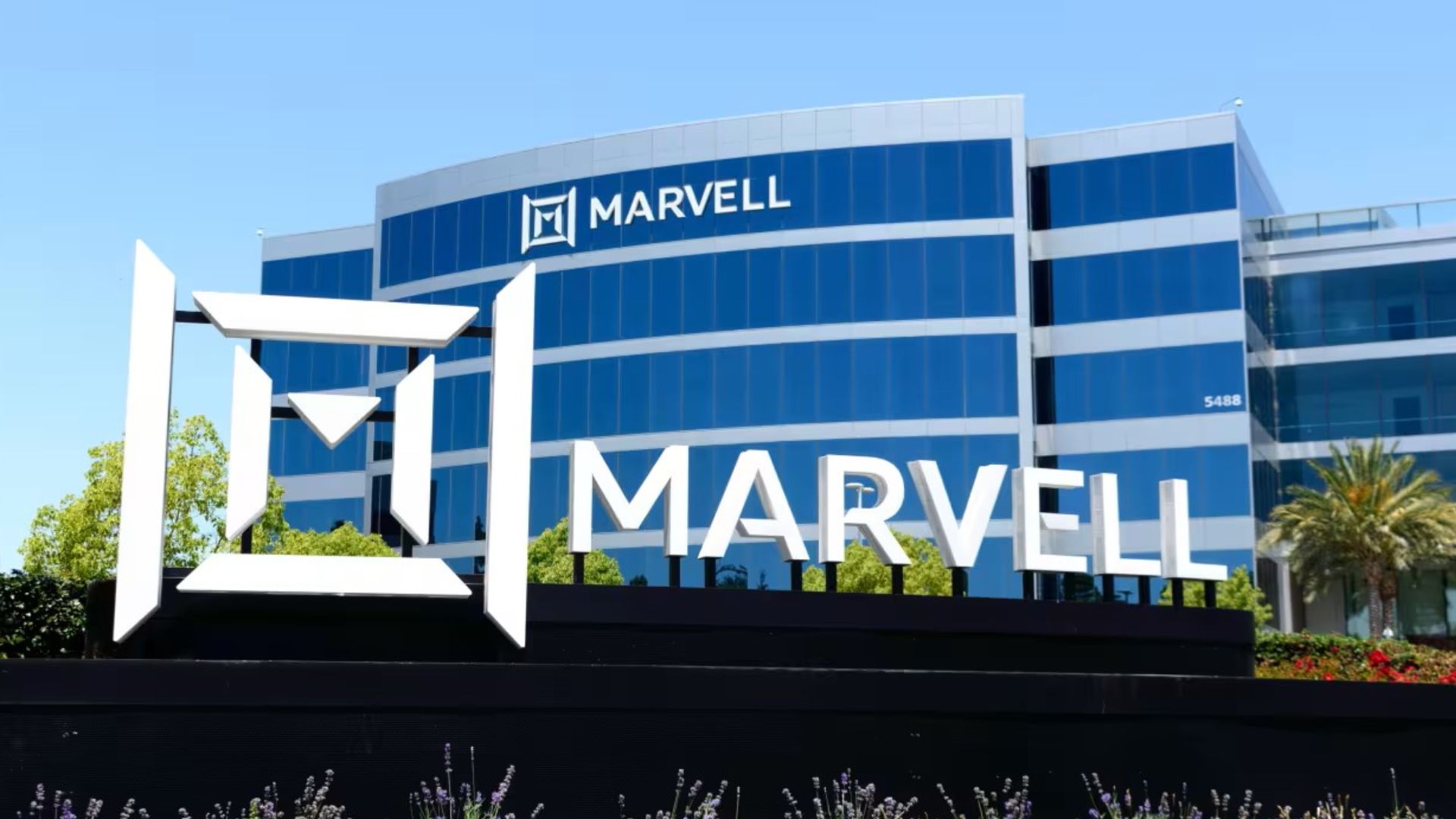
Marvell Technology has agreed to acquire Lumentum in an all-stock transaction valued at $115 billion, a combination that would place two major suppliers of data center optics under one roof. The Marvell Lumentum $115 billion deal, announced November 2, would give Lumentum investors 4.5 Marvell shares for each share they hold, a ratio the companies valued at roughly $1,132 per Lumentum share.
That implied price carries a 23.9% premium to Lumentum’s unaffected close on October 28, the final trading session before deal reports began moving the stock. When the merger closes, Marvell shareholders would own approximately 67% of the combined business and Lumentum holders about 33%. Both boards backed the agreement unanimously.
A multi-year path to completion
The companies expect the transaction to close in the first half of 2028, contingent on regulatory clearances and shareholder votes. The outside date is November 1, 2027, with extension options running to February 1, May 1 and finally August 1, 2028, should regulators still be reviewing the case.
The breakup terms are substantial. Marvell would owe Lumentum $3.2 billion if the deal collapses solely on regulatory grounds. If either board walks away or accepts a competing offer, Marvell would pay $5.8 billion and Lumentum $2.9 billion.
Bloomberg reported the agreement as the second-largest technology transaction on record, behind only the SpaceX-xAI merger.
Why optics matter in AI data centers
Modern AI facilities link thousands of accelerators that constantly exchange large volumes of data. Copper wiring, long the standard for connections between racks, runs into physical constraints at distances of roughly one to two meters. The industry has responded by shifting to optics, transmitting data as light rather than electrical impulses.
Pluggable optical transceivers, which house a laser chip, digital signal processing chips and other optical parts, first displaced copper for inter-rack links. The next step is moving optics closer to the silicon itself through co-packaged and near-packaged optics. In those designs, a photonic integrated circuit sits directly on the switch or accelerator package, shortening the electrical path that signals must travel across a board.
Marvell has spent years assembling pieces of this market. It bought Inphi for $10 billion in 2021 and paid $3.5 billion upfront for optical interconnect startup Celestial AI in a transaction completed in February 2026.
Complementary portfolios
Marvell’s existing lineup covers much of the electronics side of optical connectivity: custom AI accelerators, Ethernet switches, high-speed SerDes, DSPs, optical drivers, transimpedance amplifiers and silicon photonics. Lumentum adds lasers, modulators, photodetectors, transceivers and optical circuit switches.
Lumentum’s compound semiconductor manufacturing is arguably its most strategically valuable asset. Indium phosphide, unlike silicon, can efficiently emit and detect light, making it central to high-performance lasers and other optical chips. Lumentum owns and operates specialized InP fabrication facilities, which CEO Michael Hurlston described during the announcement as the world’s largest InP manufacturing footprint. The company also brings gallium arsenide technology.
The merger would shift Marvell from a largely fabless model to a hybrid one, pairing its outsourced chip production with Lumentum’s internal fabs.
Customers, competition and financial targets
A central question is how existing customers react to greater vertical integration. Marvell supplies optical module makers, while Lumentum sells components to companies that also compete with its transceiver business. CEO Matt Murphy said on the November 2 investor call that Marvell intends to preserve its existing component supply model. Hurlston noted that supplying competitors is already standard practice in the optical industry.
Marvell projects the combined company’s addressable market at about $550 billion by 2030, roughly $60 billion above the two firms’ separate estimates. Management expects more than $1 billion in annual run-rate cost synergies, mainly from cost of goods sold. On current guidance, the merged business would have about $17.7 billion in annualized revenue; Murphy said combining Lumentum’s next-quarter outlook with analyst consensus for Marvell’s next quarter would push that above $21 billion.
Lumentum’s recent results illustrate the demand backdrop. It reported $1.26 billion in revenue for its first fiscal quarter of 2027, up 136.5% year over year, and disclosed a second major near-packaged and co-packaged optics design win that Hurlston expects to generate more than $5 billion in revenue.
Market skepticism and competitive context
Investors initially balked at the price. Marvell shares closed down 12.7% at $171.41 on November 2, while Lumentum fell 18.6% to $684.40.
Marvell already counts Google, AWS, Meta and Microsoft among its custom ASIC customers and supplies many of the largest optical transceiver manufacturers. In March 2026, Nvidia invested $2 billion in Marvell as part of a partnership bringing Marvell’s custom XPUs and scale-up networking into the NVLink Fusion ecosystem. Nvidia also holds a separate $2 billion stake in Lumentum that would convert into Marvell shares, consolidating the two positions.
Broadcom, Marvell’s biggest optics rival, already offers both custom AI accelerators and networking silicon alongside optical components. Acquiring Lumentum would give Marvell a comparably broad portfolio as optical connectivity becomes an increasingly critical layer of AI infrastructure.