

Blue Origin has confirmed a New Glenn delay, pushing the rocket’s return-to-flight mission from December to January. The slip is minor and widely expected, but it comes as the company races to rebuild its damaged launch pad at Cape Canaveral, Florida, following a catastrophic explosion nearly six months ago.
The announcement was part of a busy Thursday afternoon for Blue Origin, which also unveiled a new kick stage for New Glenn and a new rocket engine design. The pad reconstruction is ongoing, and pressure is mounting from key customers—NASA, Amazon, and the Space Force—all eager to see New Glenn flying again.
Why the New Glenn Delay Matters
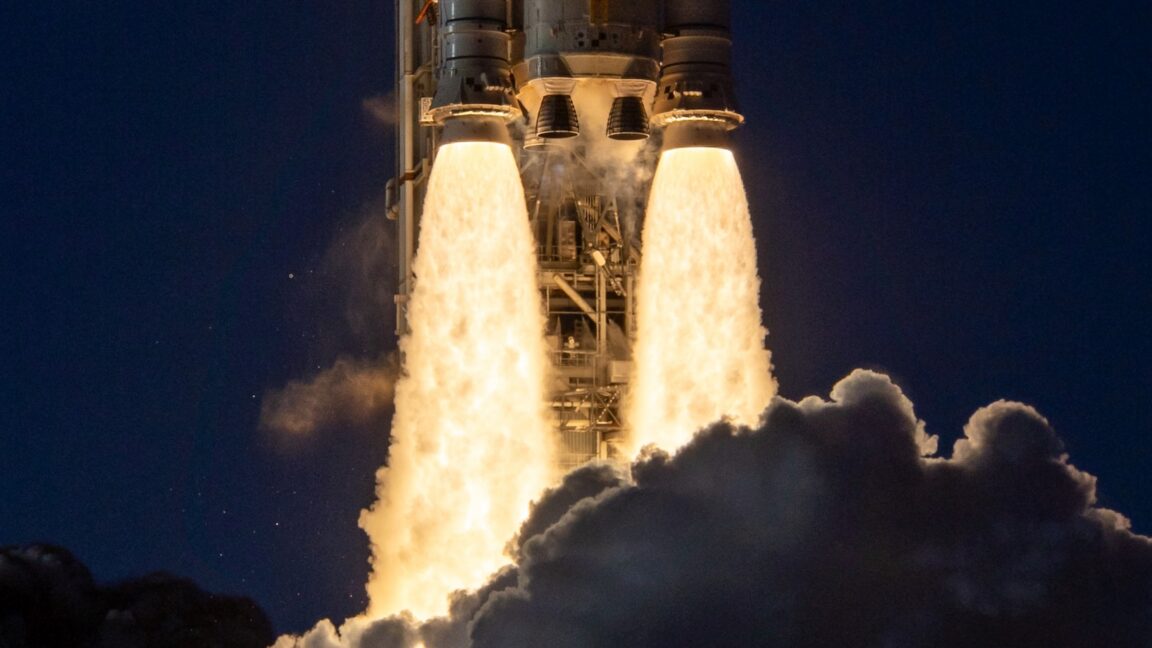
New Glenn is central to Blue Origin’s ambitions in the heavy-lift market, and the return-to-flight mission is a critical step. The delay to January is not a major setback, but it underscores the challenges of recovering from the explosion. The launch pad at Cape Canaveral remains a work in progress, and the company has not provided a specific date for the mission within January.
The customers waiting on New Glenn have significant stakes. NASA has relied on commercial partners for various missions, Amazon is building its Project Kuiper satellite constellation, and the Space Force has its own launch needs. All three have a strong interest in seeing Blue Origin’s rocket become operational again.
New Hardware on Display
Alongside the delay news, Blue Origin introduced a new kick stage for New Glenn. A kick stage is an additional propulsion element that can boost payloads to higher energy orbits or perform precise maneuvers after the main launch phase. The company also revealed a new rocket engine design, though details on its intended use were not disclosed.
These announcements suggest Blue Origin is continuing to invest in New Glenn’s capabilities even as it works through the aftermath of the explosion. The new hardware could expand the rocket’s flexibility for a range of missions.
Water-Powered Satellites from SpaceX Veterans
In a separate development, three brothers who worked at SpaceX during the Falcon 9 era are now building satellites that run on water. Their company, Argo Space, was founded in late 2022 with a vision of building infrastructure in space that reduces the need for propellants launched from Earth.
Argo Space’s satellites will use water not only as a propellant but also as a coolant and radiation shield. Water is a potentially harvestable resource on the Moon and is found throughout the Solar System, making it an attractive alternative to conventional propellants. The Carlisle brothers’ experience at SpaceX during the Falcon 9 era gives them a background in reusable launch operations, though their new venture focuses on in-space transportation and infrastructure.
The company’s approach could lower the cost of moving around in space by using a resource that is already available off Earth. However, the technology is still in development, and no timeline for a first mission was provided.
What to Watch
Blue Origin’s progress on the launch pad reconstruction and the New Glenn return-to-flight mission will be key in the coming weeks. The January window is the next milestone, and the company will need to demonstrate that it can safely resume operations. Meanwhile, the new kick stage and engine design signal that Blue Origin is looking beyond the immediate return to flight.
For Argo Space, the water-based satellite concept is an early-stage idea with potential long-term implications for space infrastructure. The founders’ SpaceX pedigree may help attract attention, but the company has yet to prove its technology in orbit.


