

AST SpaceMobile has unveiled a Blacklift rocket plan that would make the Texas-based satellite operator a launch provider, with commercial service targeted for late 2028. The announcement, made Friday, comes as the company struggles to secure rides for its large direct-to-cell satellites and underscores a growing willingness among satellite operators to take rocket development into their own hands.
A Rocket Born of Frustration
AST SpaceMobile is building massive satellites for direct-to-cell communications and needs to deploy roughly 90 more BlueBird spacecraft. While it holds launch agreements covering more than 100 satellites through 2028 with providers including SpaceX and Blue Origin, the company says those deals do not provide the regular, unconstrained access to orbit it wants. The Blacklift vehicle, a medium-lift rocket capable of lifting 20 metric tons to low-Earth orbit, is meant to fill that gap.
“The Blacklift rocket is the springboard to significantly expand our total addressable market,” said Abel Avellan, AST SpaceMobile’s founder, chairman, and CEO, in a news release. He added that the rocket would provide “regular unconstrained access to orbit” and favorable owner’s economics.
Timeline Stretches Credulity
For anyone familiar with rocket development, the 2028 target is hard to take seriously. SpaceX holds the record for the fastest commercial medium-lift development, taking 4.7 years to reach orbit with Falcon 9—and that was with years of prior engine experience, a smaller rocket, and what is widely regarded as an exceptionally talented engineering team.
Since 2015, several US companies have announced medium- to heavy-lift vehicles: United Launch Alliance’s Vulcan, Rocket Lab’s Neutron, Relativity Space’s Terran R, Firefly and Northrop Grumman’s Eclipse, and Stoke Space’s Nova. Only Vulcan has reached orbit, and it took 8.7 years despite an experienced team and about $2 billion in federal support across its suppliers. The broader track record suggests five to nine years from announcement to first orbital launch for a new medium- or heavy-lift rocket.
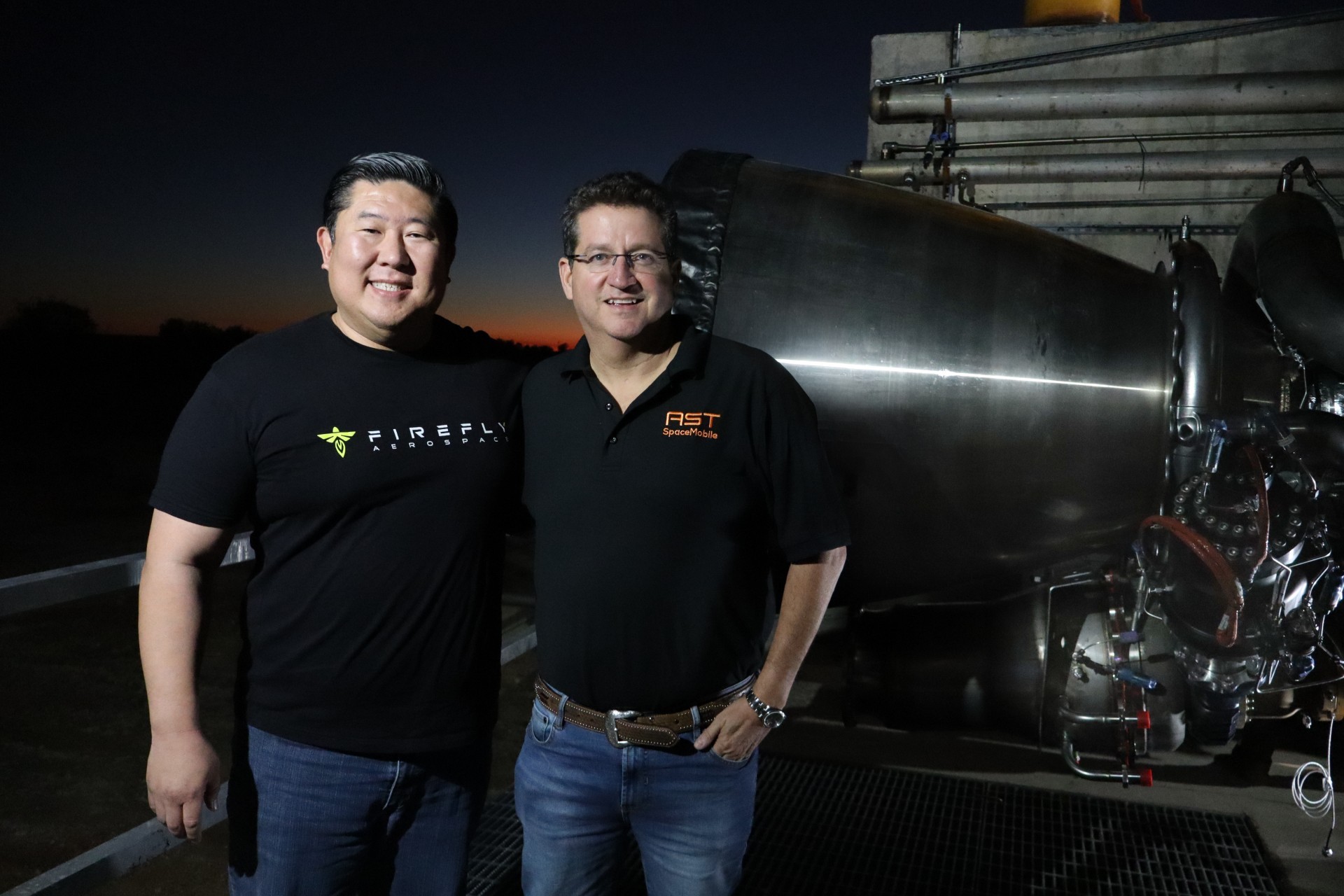
AST SpaceMobile’s counterargument is that it is not starting from zero. The company has signed an agreement with Firefly Aerospace to supply engines for the first three Blacklift rockets, provide engineering services for three years, and grant a perpetual license to manufacture the Miranda and vacuum-variant Vira engines. Nine Miranda engines will power Blacklift’s first stage.
Engines are typically the most challenging part of rocket development, so procuring them could save time—but likely a year or two, not five. The Miranda engine itself is probably at least two years away from flight testing on Firefly’s Eclipse rocket.
A Costly Shortcut
AST SpaceMobile is paying handsomely for this head start. It has committed $1.3 billion to Firefly: $800 million for the engine license, $250 million for 27 Miranda and nine Vira engines, and $250 million for engineering support. For the first three Blacklift vehicles, that works out to about $83 million per rocket in engine costs alone.
The company’s timeline remains profoundly disconnected from the historical record of every comparable rocket program this century. Perhaps AST SpaceMobile will surprise observers, but the more likely explanation is that it is a satellite operator desperate for launch capacity and willing to spend billions to secure it.
The Bigger
AST SpaceMobile is not alone in making fantastical claims. In October, a firm called Cowboy Space said it was building a large rocket named Big Iron to launch orbital data centers, with a first flight also promised for 2028.
These announcements reflect two trends. First, satellite operators planning large constellations increasingly need to lock in launch capacity years in advance—as Amazon did nearly half a decade ago—and if they cannot secure favorable terms, they are now considering building their own rockets. Second, investors appear willing to fund new entrants into the medium-lift market, recognizing the worsening launch crisis.
For AST SpaceMobile, the question remains: if it already has agreements covering more than 100 BlueBird satellites by the end of 2028, what exactly is Blacklift supposed to accomplish? Spending several billion dollars on a rocket you do not actually need is a curious strategy—even for a company that says it needs unconstrained access to orbit.


