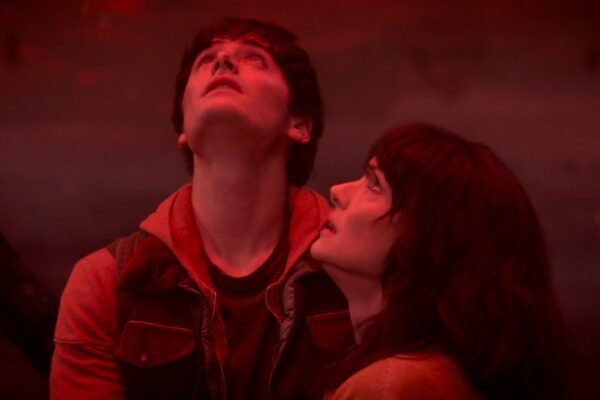
Father’s House documentary, a formally inventive film about the Danish Christian sect Faderhuset, brings together former members and celebrated actors to reconstruct life inside a community defined by faith, manipulation and abuse. The project, directed by Adam Nielsen, Andreas Koefoed and Eva Mulvad, premieres Monday in the Doc@PÖFF International Competition at the 30th Tallinn Black Nights Film Festival in Estonia.
A Collaborative Reconstruction

The film’s method is unusual: actors recreate scenes from the sect’s past under the guidance of people who lived through them. Those former members also appear on screen, sharing memories and discussing the trauma they faced. The result mixes dramatic reconstruction, behind-the-scenes exchanges and direct testimony.
Trine Dyrholm plays Ruth Evensen, now Ruth Kristiansen, who led the sect through the 1990s. David Dencik portrays former member Jerry. Laura Kronborg Kjær and Emma Sehested Høeg also take part in the recreations. Nielsen edited the film, which features cinematography by Mia Mai Dengsø Graabæk and Adam Jandrup.
Faderhuset closed as a religious congregation in 2013, and various leaders and members later moved abroad. The film is set for Danish cinemas through Camera Film on Nov. 19, with DR Sales handling international sales.
From Testimony to Co-Creation

Camilla Johnson, a former member of Faderhuset for seven years, appears in the reenactments as herself, portrayed by Kjær. After leaving, she founded the NGO InsideOut, wrote books and began giving talks to help others exit cults. Her involvement with the film began a decade ago when she met Mulvad while telling her story.
When Mulvad and Nielsen proposed that former members help direct the actors, Johnson was initially wary. She worried about the emotional cost of putting her most shameful experiences on screen. Over time, she came to embrace the idea, praising the filmmakers and actors for their respect and care.
Johnson describes the experience as freeing. Driving home from the set, she felt gratitude for her freedom, 18 years after leaving the sect. She emphasizes that the film was never solely about her story but about exposing the mechanisms of control.
Koefoed, who joined after the concept was developed, calls the approach ingenious. He notes that traditional reenactments can feel artificial, while fiction asks audiences to accept invented worlds. This hybrid method, he says, clearly shows what is being recreated and allows former members to become co-creators.
Johnson helped choose which scenes to include. One of the most intense is a birth scene involving Dyrholm as Ruth and Kjær as Camilla. Johnson initially refused to revisit it, calling it some of the worst abuse she endured. Through discussion, she came to see its importance in illustrating how power is lost when God is placed above human control.
Beyond One Community
The filmmakers hope to challenge condescending views of cult members. Koefoed says society often assumes they are weak or unintelligent, but the people in the film are smart and strong. They may have been vulnerable and seeking community, but they are like anyone else. He wants audiences to understand why people join cults and how difficult it is to leave and re-enter society.
Johnson stresses that the mechanisms at work in Faderhuset are universal. She has observed similar patterns in the United States and Jerusalem. While not everyone joins a cult, many people understand vulnerability and the search for fellowship. She sees the film as timely in an insecure world where people seek faith and belonging, and she urges viewers to question authority.
When the filmmakers sent the film to Father’s House about a month before the premiere and allowed two weeks for a response, they received none, which Koefoed says was expected. Johnson’s response was brief: that is how it is.