A British doctor who tested positive for Ebola in the Democratic Republic of Congo has been brought back to the UK for treatment. The Ebola-infected UK doctor arrived at RAF Northolt before being moved to a high-level isolation facility at the Royal Free Hospital in north London.
The patient, whose identity has not been released, is the first UK national confirmed to have caught the virus during the current DR Congo outbreak. That outbreak has now been linked to more than 5,000 deaths.
The Department of Health said the evacuation was carried out on a medical flight arranged jointly by the UK and DR Congo governments with international health partners. Upon landing, a convoy of emergency vehicles completed the transfer to the hospital. The convoy included police vans at the front and rear, two ambulances and a support car, with officers stopping traffic and holding the public back as it reached the Royal Free.
The doctor is being cared for in a highly specialised isolation unit, the department added. The Royal Free previously treated three healthcare workers who were evacuated during the 2014–2015 Ebola outbreak in West Africa.
Risk to the public assessed as low

Dr Renu Bindra, deputy director of the All Hazards Public Health Response team at the UK Health Security Agency, said established procedures exist for handling such cases and that the danger to the wider public remains low.
The UK has recorded only four confirmed Ebola cases in total. One, in 1976, followed a laboratory accident; the other three involved health workers responding to the West African outbreak between 2014 and 2015. None of those cases ended in death.
Outbreak scale and experimental treatments

Since the DR Congo outbreak began in May, more than 10,000 confirmed cases have been reported, making it the second deadliest recorded Ebola outbreak after the West African epidemic of the 2010s. The fatality rate stood at 48.6% at the end of last month.
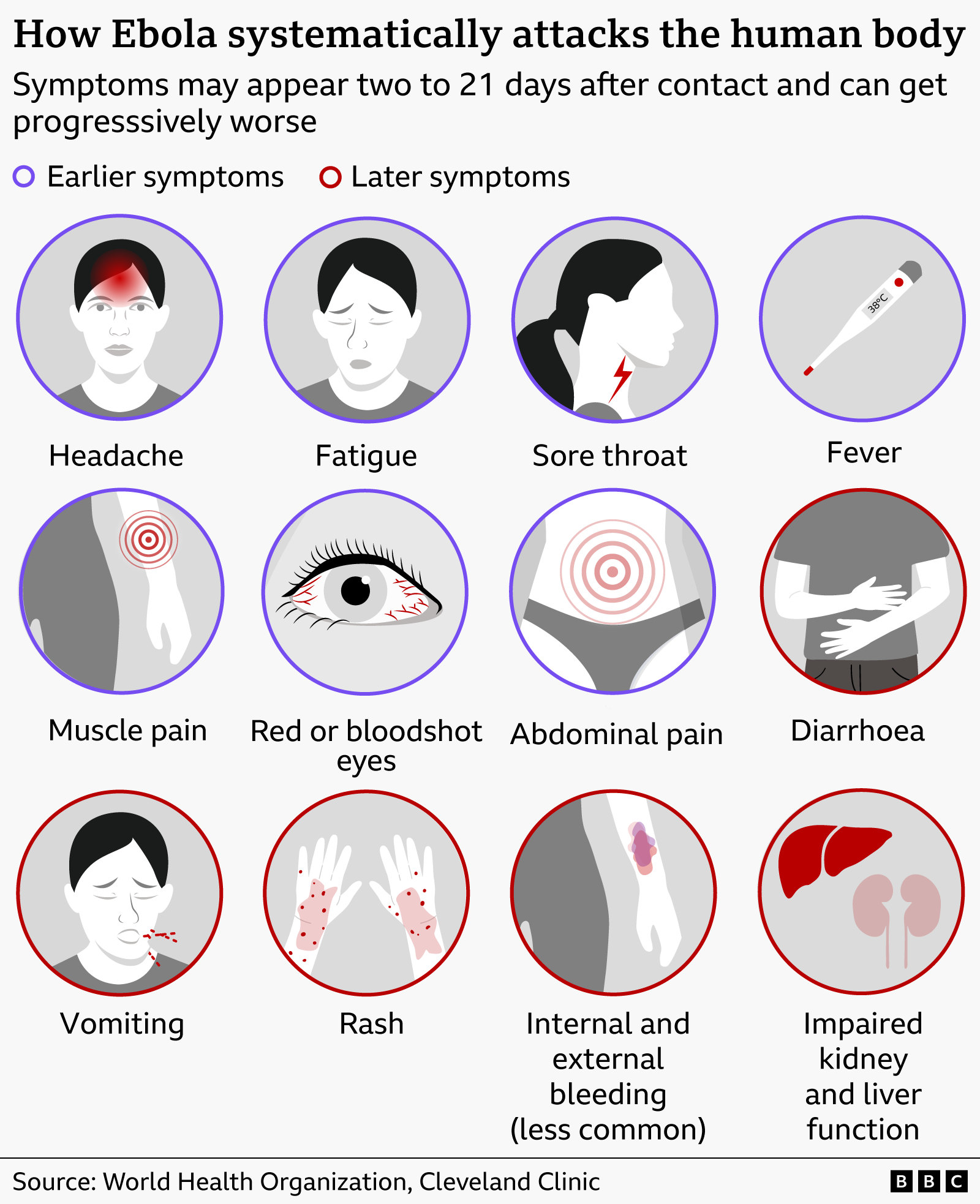
Ebola can cause severe illness and death. Early signs include vomiting and diarrhoea, and the disease can advance to organ failure and internal bleeding. It spreads between people through contact with infected bodily fluids, including blood and vomit.
The current outbreak is driven by the Bundibugyo variant of the virus. No vaccine has been approved, but the World Health Organization said experts have recommended adding two candidate drugs to an ongoing clinical trial. One was developed by the University of Oxford and the Serum Institute of India; the other by Moderna. Both will join the trial once Congolese health authorities approve them. It would be the first time vaccines designed specifically against the Bundibugyo virus are tested during an outbreak.
Ebola cases have also been confirmed in Kenya, Nigeria and Uganda since the outbreak began.