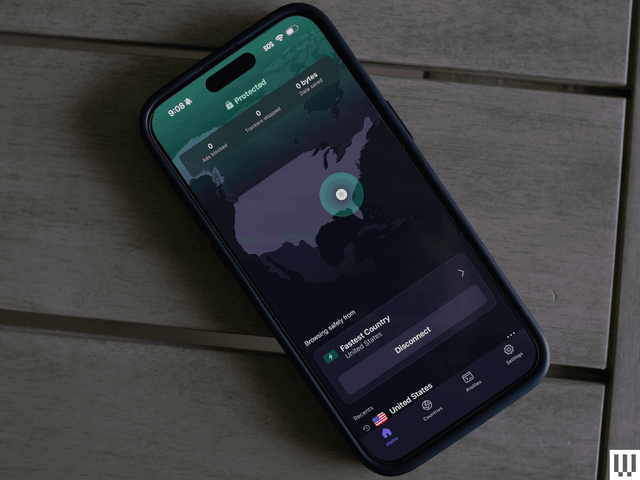
Finding the best VPN services in 2026 means looking past marketing claims and focusing on verified performance, audited privacy practices, and real-world usability. After testing across US and UK servers, a few providers stand out for keeping their promises even under pressure.
Proton VPN: The Overall Leader

Proton VPN Plus earned the top spot for its combination of speed, transparency, and features. It was the fastest service tested across US and UK connections. The company has published a transparency report since 2017, undergone annual third-party audits since 2022, and open-sourced its applications five years ago. The Plus plan covers up to 10 devices and includes split tunneling, port forwarding, double-hop connections, and NetShield ad and tracker blocking. An early Black Friday deal offers 75 percent off a two-year plan at $2.49 per month, billed at $60 for 24 months.
NordVPN: The Feature-Rich Upgrade

NordVPN operates one of the largest networks with over 7,400 servers and supports 10 devices. Its Plus plan adds an ad blocker and the NordPass password manager. Independent audits back its no-log policy and security. The service also offers dark web monitoring and optional add-ons like NordProtect identity theft protection and Incogni data removal. Speeds are decent, though not the fastest tested. Pricing runs $117 for two years, $78 for one year, or $15 monthly.
Windscribe: The Best Free Option

Most free VPNs are not worth the risk, but Windscribe offers 10 GB of data across 10 server locations with unlimited connections. Paid plans are customizable: unlimited data costs an extra $3 per month, and additional server locations are $1 each per month. A yearly Pro plan is $69. Windscribe dropped only 15.6 percent of speed in US testing. It has undergone a third-party audit, and its CEO was once charged in Greece over a user’s activity—yet the company could not produce logs, which speaks to its no-log stance. Random hashed login, introduced in December 2025, allows anonymous account creation.
Mullvad: The No-Logs Purist

Mullvad avoids email addresses, multi-year subscriptions, and social sign-on. Users generate an account number and add time using cash, crypto, PayPal, or credit card. The flat fee is €5 per month, roughly $6. It supports five devices and over 500 servers. Speed dropped about 24 percent in US testing, and port forwarding is not available. Mullvad has built RAM-only servers since 2022 and introduced DAITA, a feature that adds network noise and consistent packet sizes to defend against AI-driven traffic analysis. The company claims Swedish police raided it and it still produced no logs.
Bitdefender VPN: A Beginner-Friendly Pick

Bitdefender VPN Premium supports 10 devices and offers a clean, easy-to-use app on Windows, Mac, iOS, and Android. The first-year price is $30—about $2.92 per month—though it rises to $70 afterward. It includes a kill switch and an ad blocker, but lacks advanced privacy features and apps for TVs or Linux. For beginners who want dependable protection without complexity, it is a solid entry point.
ExpressVPN: Improved Stability and Flexibility

After years of executive turnover following its acquisition by Kape Technologies, ExpressVPN has stabilized. The service remains fast and simple to use across platforms. The Basic plan allows 10 simultaneous connections; the Advanced plan raises that to 12 and adds a password manager and 50 percent off an AirCove router; the Pro plan supports 14 devices. Pricing is $101 for two years, $72 yearly, or $14 monthly. It offers 170+ locations and supports kill switch, split tunneling, and an ad blocker.
Other Services Worth Considering

Surfshark is simple, affordable on two-year plans at around $54, and rich in features like double-hop and email masking, but its apps are not open-source. IVPN generates random IDs for anonymous accounts and accepts crypto, but its Standard plan limits users to two devices and lacks RAM-only servers. Private Internet Access has a strong track record of not logging—it could not provide user data even when subpoenaed in a criminal case—but delivered the worst speeds in testing, with over a 50 percent drop on a nearby US server.
VPNs to Avoid

Hola’s free service uses a peer-to-peer network, and its ownership of data collection firm Bright Data raises concerns; its privacy policy states it logs IP addresses, visited pages, and timestamps. X-VPN uses a proprietary protocol, lacks split tunneling, and was mentioned in a Tech Transparency Project report about free VPNs with links to the Chinese government. Both are best avoided.
How We Tested

Each VPN was evaluated on speed and security. Baseline speeds were recorded before testing, and results were run three times across US and UK servers, then spot-checked over a week. Leak tests for DNS, WebRTC, and IP were performed with Browser Leaks, and Wireshark was used to confirm packets were encrypted. Privacy assessments focused on independent audits and transparency reports.