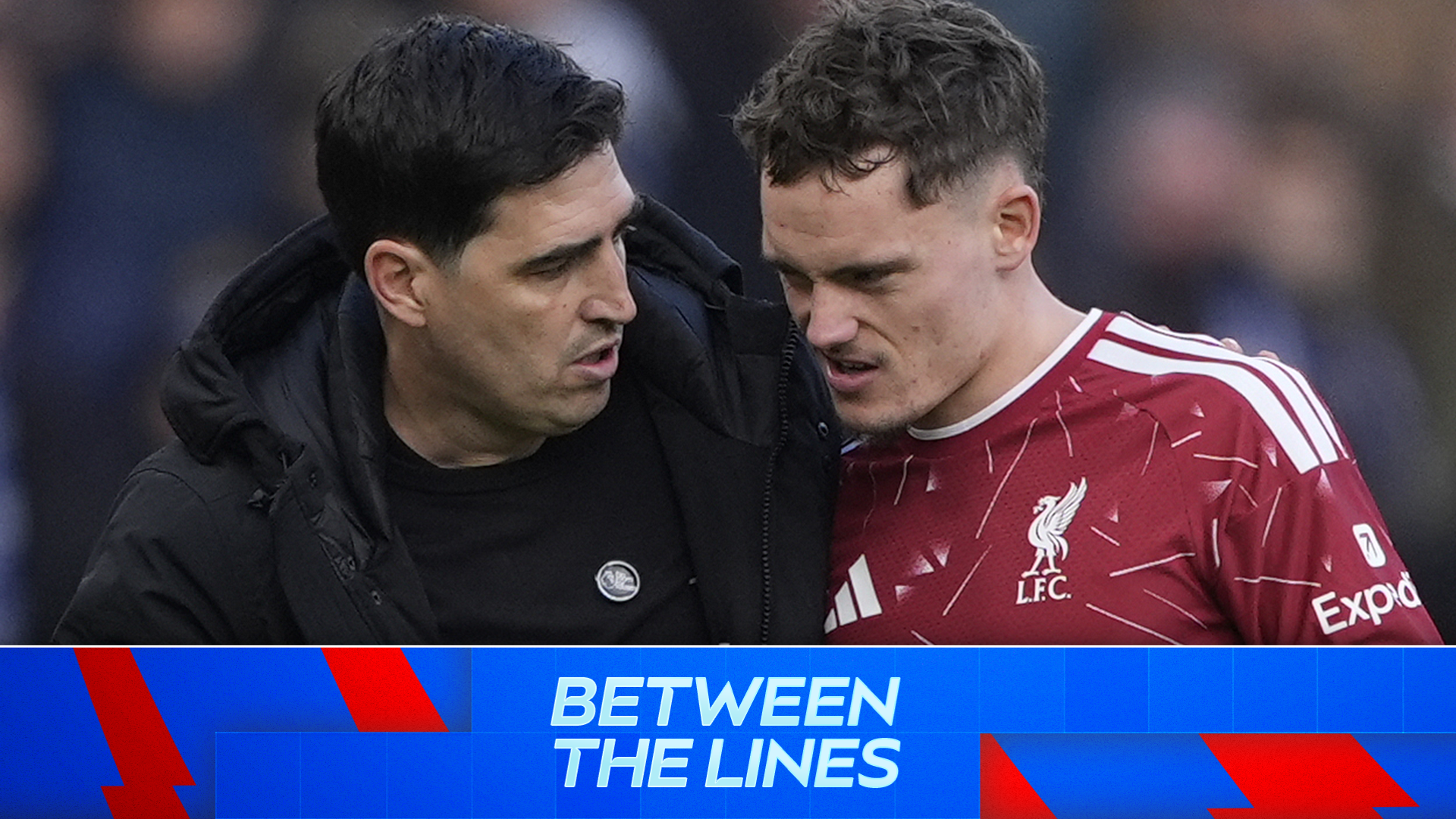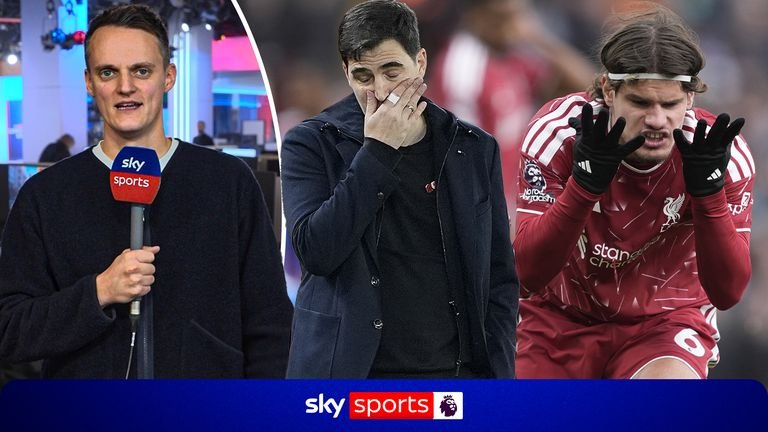
Liverpool’s creativity crisis was exposed in sharp relief against Arsenal, where the team failed to register a single shot on target for the first time in 442 Premier League home games. That blank, confirmed by Opta after initial shot credits were amended, is the headline symptom. The underlying problem, however, runs deeper than wayward finishing.
Shot volume without shot quality
Across the season, Liverpool have generated 140 shots, the fifth-highest total in the Premier League. Yet they sit ninth for goals scored and 11th for expected goals. The discrepancy points to a quality issue rather than a quantity one. Against Arsenal, 17 attempts amounted to just 1.05 expected goals, a meagre return that illustrates how rarely Liverpool have worked the ball into high-value positions.
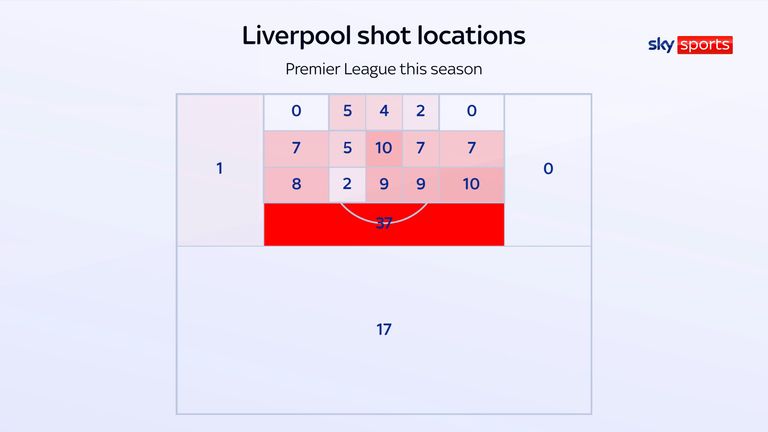
Shot locations tell part of the story. Thirty-nine per cent of Liverpool’s attempts have come from outside the box, the fourth-highest proportion in the division, behind only Manchester United, Hull and Newcastle. At the other end of the scale, just eight per cent of their shots have been taken from inside the six-yard box, the sixth-lowest share in the league. For context, Arsenal and Manchester City, the top two, take 17 per cent and 13 per cent of their shots from that close range respectively.
Szoboszlai's long-range tendency
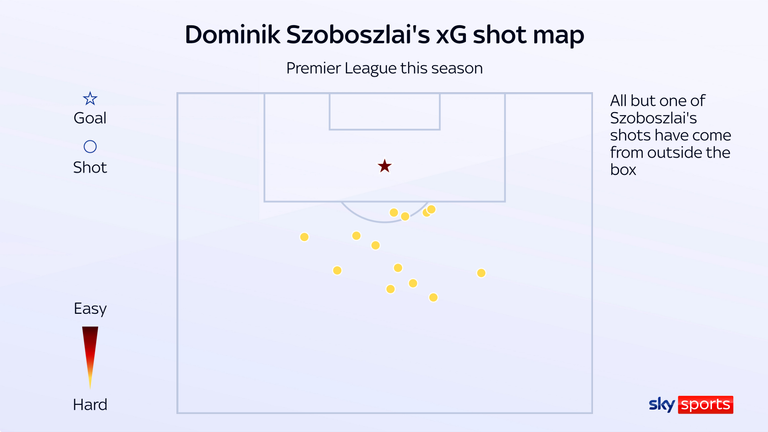
Dominik Szoboszlai embodies the pattern. Among Premier League players with at least five attempts this season, he has the highest percentage of shots from outside the box at 93 per cent. Of his 14 shots, the only one from inside the area was the penalty he converted against Newcastle on the opening day. He has not scored in the league since.
Andoni Iraola is not ideologically opposed to long-range shooting. His Bournemouth side took more shots from outside the box than any other Premier League team last season, and he has previously explained that he encouraged Antoine Semenyo, Marcus Tavernier and Lewis Cook to try their luck from distance. The difference at Liverpool is that the long-range volume appears to be a consequence of failing to access better positions rather than a deliberate tactical choice.
Wirtz's creative output under scrutiny
Florian Wirtz, signed at considerable expense to assume playmaking responsibilities, ranks second in the Premier League for chances created with 22. Yet he has not created a single Opta-defined big chance. Pascal Gross, the only player ahead of him with 24 chances created, has seven big chances to his name. Wirtz also ranks 37th for expected assists on 1.08, further evidence that the chances he is creating are of limited quality.
The team-wide numbers reinforce the point. Liverpool have created only seven big chances in nine games, the second-lowest total in the division, sitting between newly promoted Coventry and Hull. That is a striking statistic given the nearly £500m invested in the attack over the past two years. Their average of 0.09 expected goals per shot is among the lowest in the league.
Game state and the low-block problem
There are contributing factors beyond individual output. Liverpool have conceded the opening goal in five of their nine Premier League games, including the Arsenal defeat when Kai Havertz struck after 17 minutes. Only five sides have spent a higher percentage of the season trailing. That game state has allowed opponents to sit deep in compact blocks, and Liverpool have spent 27 per cent of their time building up against low blocks, the highest proportion in the Premier League.
Iraola favours quick, vertical attacks, but chasing games against organised defences makes those transitions far harder to execute. Liverpool have won just one of the five matches in which they conceded first, compared with all three in which they scored first. Starting stronger would help force opponents to emerge and leave gaps, but the immediate challenge is to generate better chances regardless of the scoreline.
Alexander Isak has overperformed in front of goal, scoring six league goals from shots worth 4.35 expected goals, partly through his ability to convert difficult opportunities. That individual brilliance has masked some of the structural issues. The broader pattern, though, is clear: Liverpool are taking plenty of shots but not the right ones, and the creativity crisis is the root cause.