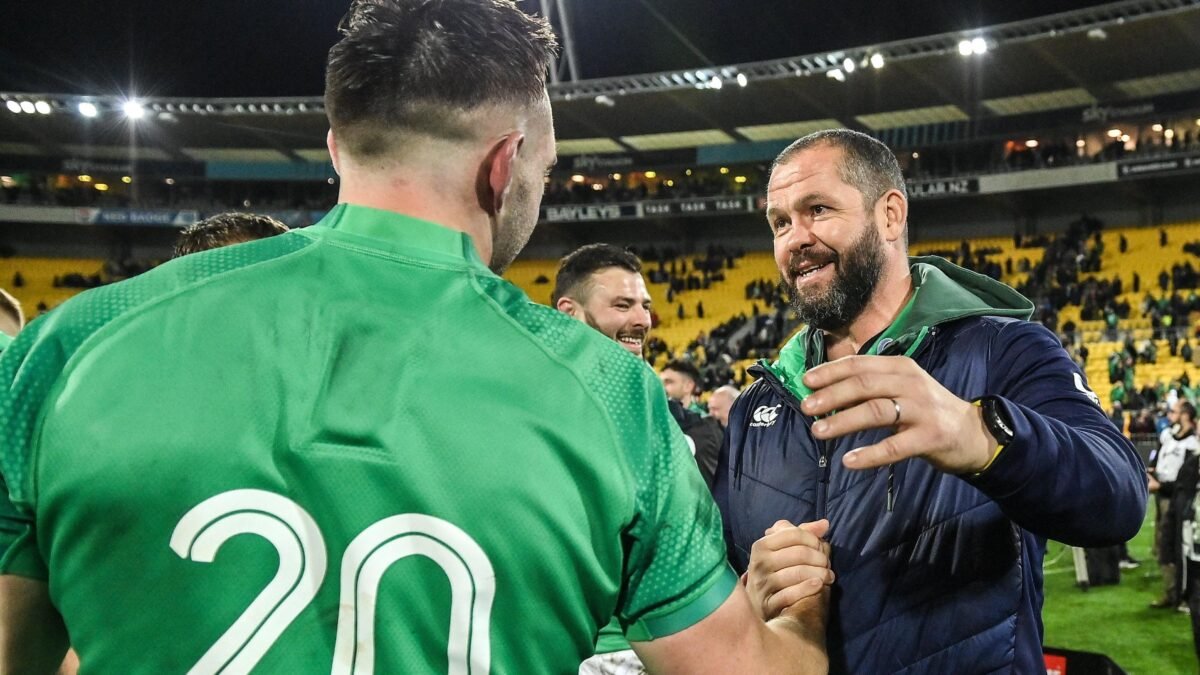
Jack Conan on Andy Farrell — Jack Conan has credited Ireland head coach Andy Farrell with creating an environment where players feel able to speak honestly about their emotions, saying the shift has strengthened the squad’s bond. The 62-cap back row, who has worked under Farrell for most of his international career, told the Ireland Rugby Social podcast that Farrell explicitly invites players to share how they are feeling, good or bad, and that this openness has made it easier for newcomers to settle.
A culture of honest conversation

Conan contrasted the current setup with earlier days when players might have been reluctant to admit confusion or uncertainty in team meetings. He said Farrell’s approach encourages vulnerability, which in turn allows others to be open and builds connection. According to Conan, Farrell will check that everyone understands a point, and players now feel comfortable saying when they do not. The fear of being wrong still exists to some degree, Conan added, but if intentions are good and a mistake is made, it is accepted. He described this as a huge and strong quality of the squad.
Injury setback and Ireland absence

Conan injured his shoulder while scoring a try in Leinster’s 48-23 Champions Cup victory over Clermont earlier this month. The injury rules him out of Ireland’s November Nations Championship matches against Argentina, Fiji and South Africa in Dublin. The Bray native, a two-time British and Irish Lion, is targeting a return for next year’s Six Nations and is determined to be available for the 2027 Rugby World Cup next October.
Playing in memory of his mother
Conan’s mother, Ann, died in August, and he spoke emotionally about his desire to get back to fitness and enjoy his rugby in her memory. He recalled that she texted him before every game with the same message of good luck and pride. That memory, he said, is now a big motivation: to enjoy the game and make her proud, and to treat stresses as a positive rather than a burden.
No thoughts of retirement yet
Although Conan acknowledges he is in the twilight years of his career, he feels physically and mentally capable of continuing for the foreseeable future. Apart from the shoulder problem, his body feels good, and he noted that he was never exceptionally quick, so he is not declining physically and remains strong. The real test, he explained, comes in whether he still wants it on the hard days, such as during rehabilitation on the bike. He still loves what he does and the environment, and the doggedness remains. Seeing other players take the field spurs him on, which he considers healthy, and he remains eager to compete. Whether that means one, two or three more years, he is content to wait and see, but for now he feels good.